
Didn’t win the H-1B lottery? Explore proven H-1B visa alternatives—such...
Read MoreHOW TO GET H1B VISA ALTERNATIVES
A Step-by-Step Guide for International Workers
HOW TO GET H1B VISA ALTERNATIVES
A Step-by-Step Guide for International Workers
Yasin Bilgehan Akalan
Attorney at Law
Immigration Law Expert – Akalan Law Firm
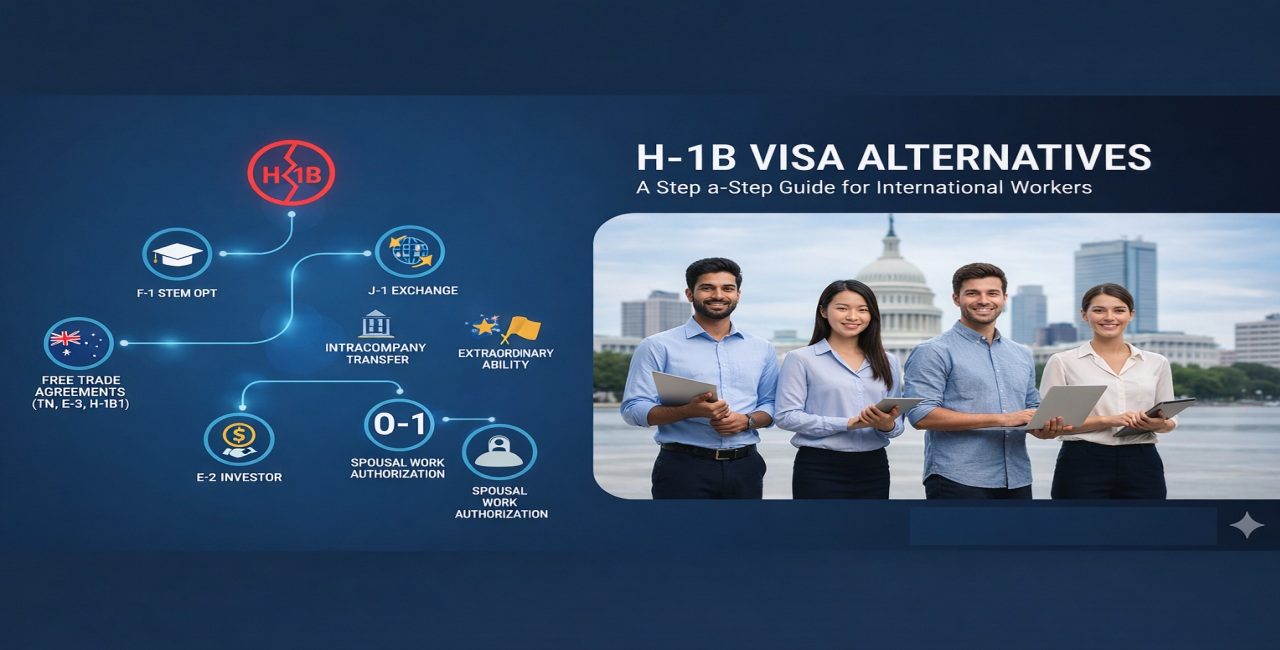
Navigating the U.S. immigration system can feel like an uphill battle, especially with the annual h 1b cap leaving many talented foreign nationals in limbo. However, the h 1b visa is far from the only path. Many international workers don’t realize that f-1 students can add 24 months to their post-completion Optional Practical Training (OPT). This stem opt benefit represents just one of many h1b visa alternatives that often go unnoticed by foreign national employees.
The U.S. immigration system offers multiple pathways to obtain employment authorization beyond the lottery. For instance, the l-1 visa allows multinational companies to transfer employees with specialized knowledge to their U.S. offices. Meanwhile, individuals with sustained national or international acclaim in sciences arts education business or athletics can qualify for the o-1 visa. For those from a treaty country, the e-2 treaty investor visa offers a unique route based on a treaty of commerce and navigation between the U.S. and their home country.
For many foreign workers, the journey starts with an academic program. Understanding how to transition from a student to a visa holder is crucial for long-term success.
Students with f-1 visas in STEM fields can secure a total of up to three years of work authorization. To qualify, your cap subject employer must be enrolled in E-Verify. You must also ensure you don’t exceed the unemployment limit during your initial period of OPT. If you’re looking for lawful permanent residence later, this extended period provides the necessary time to build a case for an immigrant visa.
The j-1 visa program is a versatile nonimmigrant worker category. Whether you are a research scholar, intern, or trainee, this path facilitates cultural exchange. Unlike the h 1b, which has a rigid annual numerical limit, many J-1 categories allow for a flexible validity period depending on the specific program.
When the h 1b visa lottery doesn’t go your way, looking at alternative visa options through direct employment is the next logical step.
Not all H-1Bs are subject to the lottery. A cap exempt employer, such as higher education institutions or non profit research organizations, can sponsor you at any time of the fiscal year. This allows you to bypass the h 1b cap entirely. Furthermore, governmental research organizations are also excellent cap exempt sponsors for high-level researchers.
The l visa is a powerful tool for multinational companies. To qualify for an intracompany transfer visa, you must have worked at a foreign office of the company for at least a year within the last three year period.
If you have achieved a level of international acclaim, the o-1 visa is a “gold standard” alternative. It requires proving extraordinary ability through documentation of awards, high salary, or original contributions to your occupational field.
Has a heavy shadow fallen over your immigration journey? The moment you opened that letter from USCIS, you weren’t just touching an envelope, you were touching the dreams, plans, and months of effort you had invested. In that moment, an indescribable silence forms inside a person; a moment when hope and disappointment blend together and time seems to stop.
Some foreign nationals have an advantage based on their citizenship. Free trade agreements have carved out specific visa categories that are often easier to obtain:
These options often require a specialty occupation (usually needing a bachelor’s degree) and a valid labor certification, but they avoid the general lottery.
For those with capital, the e-2 visa is a viable path. By investing in a U.S. business, treaty country nationals can live and work here, with the visa being renewed indefinitely as long as the business thrives.
A significant benefit of certain categories like the l-2 or e-2 is that dependent spouses and unmarried children receive status. Spouses can often obtain employment authorization (EAD) or, in some cases, have “incident to status” work rights, allowing them to work for any employer in the U.S.
Regardless of the path, you must meet specific eligibility criteria. This often includes:
Note: Navigating immigration law is complex. While this guide outlines alternative visa options, always consult with a professional regarding uscis regulations to ensure your work authorization remains valid.
Didn’t win the H-1B lottery? Explore proven H-1B visa alternatives—such...
Read MoreRenewable energy investments in the U.S. offer powerful immigration opportunities...
Read MoreTexas can help foreign investors execute faster and build stronger...

Read MoreA new U.S. policy will suspend issuance of immigrant visas...

Read MoreAkalan Law Firm, PLLC

All Rights Reserved © 2024