
The Naturalization Interview is one of the most important steps...
Read More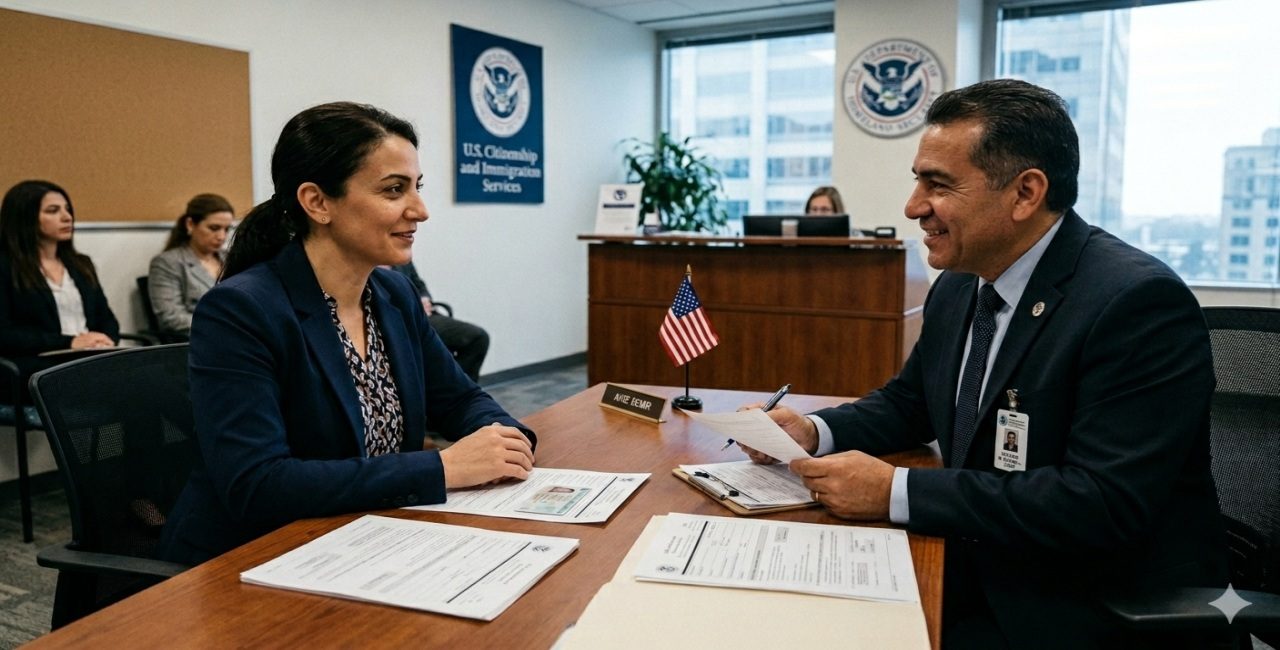
 Introduction to the Naturalization Process
Becoming a U.S. citizen is a life-changing milestone, and the naturalization process is designed to ensure that applicants are fully prepared for the rights and responsibilities of citizenship. The journey begins with submitting your application and continues with a thorough background check conducted by USCIS (United States Citizenship and Immigration Services). One of the most important steps is the citizenship interview, where a USCIS officer will review your eligibility and ask questions about your background, application, and knowledge of U.S. history and government.
To help you succeed, USCIS provides a range of study materials covering the civics test and English test. The civics test focuses on key topics in U.S. history and government, while the English test measures your ability to read, write, and speak basic English. Reviewing these materials and practicing your responses can make a significant difference in your confidence and performance during the interview. By understanding each stage of the naturalization process and knowing what to expect, you can approach your citizenship interview with clarity and assurance.
Understanding the Naturalization Interview ProcessUSCIS will schedule an interview to complete the naturalization process once they finish all preliminary work on your case [1]. A USCIS officer uses this interview as a central examination to verify the information you provided in your Form N-400 application. The officer places you under oath and reviews all factors relating to your eligibility for citizenship [2].
Your interview has three distinct parts. The USCIS officer reviews your N-400 application first and asks questions to clarify or confirm your responses[2]. These questions cover your personal history, immigration background, education, employment and moral character [3]. You can ask the officer to repeat or rephrase questions if needed [2] . The officer is not required to conduct these sections in a specific order, and in many cases the interview may begin directly with the civics questions.
The first part is the English portion, which assesses your speaking ability throughout the interview as you answer questions. The interview itself is the first part of the English component of the citizenship exam. You’ll also take an English and civics test unless you qualify for an exemption or waiver. The English test has three components: speaking, reading, and writing. For the reading test, the officer asks you to read a sentence aloud. If you cannot read the first sentence correctly, the officer may give you a second and, if necessary, a third sentence. For the writing test, the officer reads a sentence and asks you to write it correctly. If you do not pass on the first attempt, the officer may provide a second and, if necessary, a third sentence [4].
The third part is the civics portion of the naturalization interview. The officer asks up to 10 questions from a list of 100 civics questions for applications filed before October 20, 2025. You must answer 6 out of 10 questions correctly to pass the civics portion. The 2008 naturalization civics test is an oral test consisting of 10 questions from a list of 100 civics questions. For applications filed on or after October 20, 2025, the civics test will consist of 20 questions from a list of 128 civics questions, and you must answer 12 out of 20 questions correctly in that case [4]
The naturalization interview usually lasts between 20 and 30 minutes. The exact duration varies depending on how long it takes to verify your application information and assess your English and civics skills [3].
Naturalization Interview Results: What to Expect
USCIS provides you with a notice of results at the end of your examination [2]. Four outcomes are possible:
USCIS has 120 days from your original interview to issue a decision [5]. You might participate in a same-day naturalization ceremony if approved, though this isn’t always available [1]. You receive two opportunities to meet the English and civics requirements [4]. You’ll be retested between 60 and 90 days from your original interview if you fail any portion during your first attempt [2].
Preparing for Your Naturalization InterviewMake a copy of your completed Form N-400 before you submit it. The USCIS officer will ask questions from your application to verify your answers. Each section needs careful review, and you should prepare to explain any change that occurred since you filed the form, such as a new address, divorce, or international travel. If you have a change of address, you must notify USCIS within 10 days of relocating to stay compliant and ensure accurate communication. Inconsistent answers during the interview raise concerns. The officer may question your application if your spoken responses contradict what you wrote on your N-400.
Officers typically ask questions about your background, residence history, employment, and moral character. Common questions include why you want to become a U.S. citizen, whether you’ve traveled outside the U.S. in recent months, and if you have affiliations with any organizations. You should explain each section of your application in English. Build confidence by rehearsing with a friend or family member. Be honest when you answer questions. Ask the officer to repeat or rephrase it if you don’t understand a question.
You must bring your interview appointment notice (Form I-797C), Form I-551 (your Permanent Resident Card), a state-issued identification such as a driver’s license, and all valid and expired passports and travel documents to the naturalization interview. Include your marriage certificate or divorce decree if married. Tax returns or IRS transcripts for the past five years are required, or three years if you’re applying based on marriage to a U.S. citizen. Men between 18 and 31 need their Selective Service registration acknowledgement card. Bring arrest reports, court dispositions, and sentencing records if you have any criminal history.
USCIS now uses a comprehensive method to review good moral character. Officers think over positive attributes such as community involvement, family responsibilities, stable employment and tax compliance. They also inspect disqualifying behaviors including permanent bars like murder or aggravated felonies and conditional bars such as controlled substance violations or two or more DUI convictions. You should prepare evidence of your positive contributions, such as school records, employment history, volunteer work, or letters from community leaders.
Your knowing how to speak English gets assessed throughout the interview. Surround yourself with native English speakers and use English regularly, even when alone. Study the USCIS vocabulary lists for reading and writing tests. Language learning apps like Duolingo or Babbel can help. YouTube videos with subtitles and reading in English will sharpen your listening skills and comprehension.
Overcoming Challenges and Staying FocusedPreparing for the naturalization test and citizenship interview can feel overwhelming, but with the right mindset and resources, you can overcome any obstacles. Start by organizing your study materials—USCIS offers official civics test questions and English vocabulary lists to help you prepare. Practice answering questions out loud, as the citizenship interview will require you to respond clearly and confidently to the USCIS officer’s questions.
If you find certain topics challenging, don’t hesitate to seek guidance from an experienced immigration attorney or a trusted representative. They can provide personalized advice and help you navigate the naturalization process, ensuring you’re ready for every part of the interview. Staying organized, setting aside regular study time, and reviewing your application thoroughly will help you provide accurate and truthful answers during the interview.
Remember, the USCIS officer will ask questions to assess your knowledge and eligibility for citizenship, but their goal is to verify your readiness—not to trick you. With dedication, persistence, and the right support, you can pass the naturalization test, take the Oath of Allegiance, and achieve your dream of becoming a U.S. citizen. Stay focused, keep studying, and trust in your preparation—you’re closer than ever to reaching your goal.
What to Do During the InterviewIt is recommended that you arrive early for your appointment; if possible, be there 30 minutes in advance. You’ll pass through a security checkpoint like airport screening, so leave prohibited items such as weapons or sharp objects at home. Present your appointment notice and government-issued photo ID at the entrance [6]. Once you clear security, check in at the reception desk where staff will assign you a number and direct you to the waiting area.
The officer will require you to take an oath to be truthful. Lying under oath is a crime and can make you ineligible for citizenship. The officer reviews your N-400 for accuracy and asks about any changes since you filed. Request clarification if you don’t understand a question rather than guessing. Officers must repeat and rephrase questions until they’re satisfied you either understand or cannot comprehend the English [9]. Your responses must match your application. The officer may update your application based on your verbal answers if discrepancies arise.
The conversation assesses your English speaking skills throughout [9]. For the reading portion, the officer will ask you to read a sentence aloud. If you cannot read the first sentence correctly, the officer may provide a second and, if necessary, a third sentence. For the writing portion, the officer reads a sentence and asks you to write it correctly. If you do not pass on the first attempt, the officer may provide a second and, if necessary, a third sentence. The civics test format depends on your filing date. Applications filed before October 20, 2025 require answering 6 out of 10 questions from the 100-question list. Applications filed on or after October 20, 2025 require answering 12 out of 20 questions from the 128-question list [7].
You won’t be disqualified if you ask an officer to repeat or clarify questions. Officers understand that repeating questions may be necessary and won’t penalize you unless they determine you cannot understand English after multiple attempts [4]. Stay calm and take your time formulating responses. Focus on providing truthful and consistent answers rather than perfect ones.
After the Naturalization InterviewThe officer hands you Form N-652 documenting the outcome when your examination ends [8]. USCIS has 120 days from your original interview date to issue a final decision [5]. Four possible results exist:
Granted – if the evidence establishes your eligibility.
Continued – if USCIS requires additional documentation.
Second Interview Scheduled – if you did not pass the English or civics test.
Denied – if you are found ineligible for naturalization. [1].
Your application continues when you fail the English or civics test, provide incomplete documentation, or USCIS requires additional evidence. The officer issues Form N-14 specifying missing information and response deadlines [3]. USCIS permits 30 days to respond to requests for evidence [5]. USCIS schedules a re-examination between 60 and 90 days after your original interview for test failures [8].
You may participate in a same-day oath ceremony once approved, depending on your USCIS district [1]. You’ll receive notification with your ceremony date, time and location otherwise. You must complete the Form N-445 questionnaire, surrender your permanent resident card and take the Oath of Allegiance [6]. You become a U.S. citizen only after taking the oath, not when your application is approved [1].
USCIS retests only the portion you failed between 60 and 90 days from your original examination [7]. Your application gets denied if you fail the second attempt [9]. You can reapply for naturalization as many times as needed with no waiting period if test failure was the only reason [2].
ConclusionYou now have everything you need to approach your naturalization interview with confidence. Study your N-400 really well and practice your English each day. Gather all required documents and prepare to answer questions with honesty. Note that the officer wants to verify your eligibility, not trick you. Stay calm and ask for clarification when needed. Be yourself. Proper preparation can turn those 20 minutes into your gateway to U.S. citizenship. You’ve got this!
References[1] – https://www.uscis.gov/citizenship/learn-about-citizenship/10-steps-to-naturalization
[2] – https://www.uscis.gov/citizenship/learn-about-citizenship/commonly-asked-questions-about-the-naturalization-process
[3] – https://www.cliniclegal.org/resources/citizenship-and-naturalization/frequently-asked-questions-about-naturalization-process
[4] – https://www.justia.com/immigration/naturalization-citizenship/naturalization-interview/
[5] – https://www.uscis.gov/policy-manual/volume-12-part-b-chapter-4
[6] – https://my.uscis.gov/citizenship/what_to_expect
[7] – https://www.uscis.gov/citizenship/learn-about-citizenship/the-naturalization-interview-and-test
[8] – https://www.uscis.gov/policy-manual/volume-12-part-b-chapter-3
[9]– https://www.uscis.gov/policy-manual/volume-12-part-e-chapter-2

The Naturalization Interview is one of the most important steps...
Read More

Family reunification allows U.S. citizens and permanent residents to sponsor...
Read More
The EB-5 Immigrant Investor Program offers foreign investors a direct...
Read More
The H-1B Visa Project Firewall introduces the most aggressive enforcement...
Read More