

Discover the best US Work Visa options in 2026 and...
Read MoreRenewable Energy Investment Market in the United States
How Turkish Energy Companies Could Get a Foot In The Door
Yasin Bilgehan Akalan
Attorney at Law
Immigration Law Expert – Akalan Law Firm

The US Energy Information Administration (EIA) is predicting a bit of a boom in electricity generation in the States over the next couple of years. We’re talking a 2.4% increase in 2025 and 1.7% in 2026 – all pretty impressive considering the lackluster growth we saw between 2010 and 2020 (US Energy Information Administration, 2025). It’s also worth noting that clean energy, like solar and wind, is at the forefront of this growth, and is providing a whole host of benefits by cutting down on CO2 emissions and helping create a more sustainable future.
The rapid expansion of renewable energy capacity is also a pretty big deal. According to Reuters, solar energy alone accounted for 84% of new electricity capacity in the US in 2024 (Sheldrick, 2025). And the stats just keep on getting better – renewables are now more affordable than fossil fuels in most parts of the world, and are driving global energy investment trends. As a result, renewable energy is the dominant force behind new capacity additions.
As if that wasn’t enough to get excited about, the Inflation Reduction Act (IRA) is a major game-changer. This piece of legislation is often described as the most comprehensive energy and climate legislation in US history, and it’s significantly reducing project development costs across renewable energy, hydrogen, energy storage and nuclear power. This in turn is making the renewable energy sector a major source of job creation and economic growth – plus investing in renewables is creating jobs in every single part of the industry. So it’s no surprise that international investor interest in the US energy market has really taken off (U.S. Environmental Protection Agency [EPA], 2023)
So when you put all these factors together, it’s clear that the US energy sector is not just a significant domestic market, but also one of the key players shaping global energy strategies. Loads of countries are benefiting from the adoption of renewable energy, and switching to clean energy sources is helping to cut down on air pollution and health problems. In short, the US energy sector offers a really attractive environment for foreign investors, including Turkish energy companies.
Of course, investing in renewable energy has its benefits too – it’s great for the environment and it can provide some really significant financial returns over time.
Against this backdrop, Turkish energy companies are pretty well placed to take advantage of the ongoing transformation of the US energy market. The US market is looking for companies with expertise in EPC contracting, engineering, and cost advantages in energy equipment manufacturing – all areas where Turkey has a real strength.
Turkish companies should definitely take a look at investing in the US renewable energy market – the market conditions are now pretty favourable, and there are loads of opportunities out there. Plus, if you invest in different technologies and geographies, you can mitigate the risks associated with variable resources.
By 2026, the US energy sector is looking like it’s going to be in a period of rapid expansion, driven by a combination of favourable investment conditions and rapid technological change. Over the last decade, the renewable energy sector has grown at a rapid pace, with public and private investment playing a bigger and bigger role in supporting its growth. Renewable energy investments have really taken off in the past few years, thanks in no small part to strong federal and state-level incentives.
In fact, renewable energy investments now account for over 90% of new electricity capacity in 2024, and investment in the US clean energy transition has been breaking records left and right over the first half of 2024. This ongoing transition is not just supporting economic growth and environmental goals, but also making our energy supply a lot more resilient and diversified.
The Inflation Reduction Act has played a key role in reducing the financial risks associated with investing in renewables. By providing long-term tax credits for clean energy projects, the IRA is making it easier for investors to get involved. And according to the Rhodium Group, this is having a major impact on capital flows into the renewable sector – these policy measures are really accelerating the growth of the clean energy sector.In addition , Forbes estimates that the IRAs clean energy tax incentives – especially the Investment Tax Credit and the Production Tax Credit – could double wind and solar deployment in the United States by 2030 (Forbes, 2022) Efficiency is key when it comes to renewable energy investments and that’s where the Levelized Cost of Energy comes in – it’s a crucial metric for comparing where different projects stand in terms of efficiency. The ITC has been a game changer for the U.S. solar industry since its inception in 2006, seeing an astonishing expansion of over 10,000 percent – while the PTC offers a tax credit for each kilowatt-hour of electricity generated by qualified facilities for the first 10 years of operation. This projection gives a sense of just how massive an opportunity is being created by policy support.
Meanwhile , data from SEIA’s Solar Industry Research confirms that the U.S. solar industry is still growing at a crazy fast rate. Installed solar capacity is going up every year – solar is still generating the most new electricity capacity – and both jobs and economic output are steadily climbing (Solar Energy Industries Association & Wood Mackenzie, 2025)..
Given where we’re headed , Turkish companies should be on the lookout for opportunities in several key areas, including:
It’s worth noting that critical minerals are a must-have for making clean energy technologies like batteries and wind turbines , so investing in these materials is a strategic priority. And diversifying the supply chain will be vital to building in some resilience against disruptions from natural disasters , geopolitics , or market fluctuations. Turkish companies should definitely factor in the variability of natural resources and potential extreme weather events when evaluating renewable energy projects in the U.S.
Considering the fact thatTürkiye has some well established engineering capabilities and EPC experience , Turkish companies are in a pretty good position to compete effectively in large-scale U.S. energy projects.
The fact that the U.S. energy market is so big and diverse means there are multiple entry points for Turkish companies across different areas. Diversifying energy portfolios to include alternative sources and other sources beyond traditional fossil fuels is vital for strengthening energy security and achieving sustainability goals. Renewable energy generation comes from sources that replenish themselves naturally , like solar , wind , hydro , geothermal and biomass – each with its own strategic advantages.
By 2024 , the U.S. solar sector had added about 50 GW of new capacity – an increase of around 21% compared to the year before , which goes to show the momentum that renewable energy deployment has (Solar Energy Industries Association & Wood Mackenzie, 2025).
Renewable energy projects are crucial for promoting sustainability, driving economic growth and creating jobs. And because they’re naturally replenished and don’t emit much greenhouse gases , they’re essential for reducing the environmental impact and fighting climate change. Wind turbines and geothermal energy are key to diversifying renewable energy portfolios and making energy security a bit more reliable. Companies involved in the renewable energy value chain include manufacturers of solar panels and wind turbines – but it’s worth noting that solar and wind generation can be a bit unpredictable due to weather dependency , introducing some intermittency risks that need to be managed to ensure a reliable energy supply.
Over 2024 and 2025 the United States turned out to be the worlds largest LNG exporter – and while new terminal investments continued to expand capacity (U.S. Energy Information Administration, 2024) , demand remains strong for EPC services related to liquefaction facilities storage infrastructure and natural gas pipelines.
According to SEIA the U.S currently has around 83 GWh of installed energy storage capacity – which is projected to get to about 450 GWh by 2030 , but SEIA reckons this will be nowhere near enough and that stronger policy support is needed to meet demand (Solar Energy Industries Association, 2025).
Heat pumps are also proving a big draw for clean investment across much of the Southeast – where homes and businesses have long liked them as a popular choice for efficient heating and cooling.
As a result , there are significant opportunities for Turkish equipment manufacturers and system integrators looking to break into the U.S. energy storage market.
Much of the US electricity grid is aging and has long since outgrown its original design capacity. This leaves us with a worrying situation where power outages are now all too frequent and prolonged. It’s not surprising then, given this state of affairs, that there’s a growing demand for advanced smart grid solutions that use digitalisation, automation and real-time monitoring to get everything back on track. (U.S. Department of Energy, n.d.).
Hydrogen is one another of those tantalising emerging assets that holds a lot of promise. Section 45V of the IRA’s Clean Hydrogen Production Tax Credit which was introduced has provided a strong per-kilogram incentive for clean hydrogen production – as long as its being done in a qualified way of course – for up to 10 years (U.S. Department of Energy, 2025).
As a result you can expect a lot of opportunities to emerge in the systems that produce, store and transport hydrogen. Carbon capture too, as a relatively new technology in the field of carbon management, is seeing an increasing amount of investment and is set to play a significant role in the clean energy sector.

The US operates under a really complex system of rules and regulations with different states each having their own economic policies, incentives and energy strategies to boot. Plus each state makes its own decisions about what kind of investment they will allow and how it will be structured. Local natural resources, like the amount of sunlight or wind available in the area, play a huge role in determining what kind of clean energy investment is possible in each state.
In fact one of the key decisions that foreign companies looking to get into the US clean energy sector need to make is which state to base themselves in. With the right state behind them, they can be well on their way to making a success of their business.
Each state has its own unique advantages when it comes to different areas of clean energy investment – which is why understanding the local dynamics is key for a company looking to make a go of it in the US.
New York is another state that’s really made a name for itself in the clean energy sector – this time in offshore wind development. It’s got some ambitious plans to develop 9,000 megawatts (9 GW) of offshore wind capacity by 2035. (New York State Energy Research and Development Authority, n.d.).
New Mexico has got a growing reputation for itself as a place for clean energy investment, particularly in wind and solar power. While public investment has played a big part in helping to grow this sector across the state, complementing private capital has been a crucial part of the equation.
And finally, some Southern and Mid-Atlantic states are competing with each other to attract investments in manufacturing related to electric vehicles and energy storage systems. Some of them, such as Mississippi and Georgia, are offering incentive packages that support the building of battery manufacturing facilities through state grants, tax incentives and workforce development programmes (Wagster Pettus, 2024).
Irrespective of which state you end up choosing, companies that want to operate in the US energy sector are going to have to go through the following list of mandatory steps before they can get started.
First off, businesses that are set up as limited liability companies, corporations, partnerships or nonprofit organisations need to appoint a registered agent in the state that they are based in. This agent is then the official point of contact when it comes to anything that the state wants to send to the company (U.S. Small Business Administration, n.d.-a). Next, companies need to get hold of an Employer Identification Number (EIN). This is a federal tax ID number that is pretty much essential for just about everything – from employment to banking, to taxes and federal reporting (Internal Revenue Service, n.d.).. Can’t get around it really.
On top of that, companies need to create internal governance documents. Now, for LLCs this means putting together an Operating Agreement that sets out the rules of the game, including governance structure, financial decisions, profit distribution, and exactly what the members – that’s the big cheeses – are responsible for. Now, it’s worth noting that some states require a written operating agreement – and California, Delaware, Missouri, New York, and Maine are some of the ones that do (U.S. Small Business Administration, n.d.-b).
Corporations, on the other hand, usually need to adopt bylaws to cover off things like board structure, decision-making processes, meeting rules and all that internal governance stuff.
Finally, companies need to tick off state licensing requirements, get any necessary environmental permits, sort out state and local taxes, and get some proper commercial insurance in place. All of these bits and bobs are pretty much essential if you want to secure project funding – let alone do business with any of the big players in the US energy sector.
Sometimes the fate of a startup doesn’t hinge on a single line of code, but on whether the person who will write that code can cross a border. In an era where the hottest AI startups race against global competitors, the ability to move talent—fast, legally, and strategically—can make the difference between scaling and stalling.
Getting into the US energy market is not just about technical know-how or commercial planning – you need to have a solid immigration strategy in place if you want to do it right. In other words, you need to line up your expansion plans with the rules and regulations around US immigration law, which is administered by USCIS.
So, energy companies need to pick the right visa categories for their execs, technical bods and short-term business activities.
The L-1 visa is a pretty useful option for Turkish energy companies looking to get a foothold in the US market. This visa allows you to transfer key personnel from an overseas office to a related US operation, or to set up a brand new US office.
The L-1A visa is for the top dogs and senior managers – the execs. They get the authority to set up shop, over see and run the US operation. The L-1B visa is for the technical bods – the engineers and technical professionals. They get to bring in their specialist knowledge to the US operation.
If you’re a multinational with lots of staff moving between offices, the L-1 Blanket program is a pretty neat way to go. L-1 eligibility is all about the corporate link-up between your US and foreign offices, the employee’s role and how long they’ve been working abroad.
Here’s the thing: when done properly, the L-1 visa can also be a way to get a green card – although only if you’re transferring as an L-1A.
As a treaty country, Turkey makes the E-2 visa a pretty attractive option for Turkish investors. The E-2 visa is for people who want to invest in a US business that is generating some economic activity.
Now, unlike some of the other visa categories, the E-2 visa doesn’t have a fixed minimum investment amount. Instead, it’s all about the nature and scale of the business. So, if you’re investing in a small business, you might not need to put in as much cash.
One of the key advantages of the E-2 visa is that you can renew it as many times as you need – provided the business is still going strong. So, it’s a pretty good option for EPC offices, trading companies and research and development centers.
E-2 visa requirements are pretty straightforward: the investor has to be from Turkey, they have to have a legitimate source of funds, the business has to be based on an active enterprise that is generating some economic activity – and so on.
The H-1B visa is a pretty useful nonimmigrant visa option for energy engineers, software specialists and research and development professionals. The H-1B visa is for people with specialized knowledge – and the jobs have to be pretty technical.
One of the advantages of the H-1B visa is that you can pursue a green card while still being on a nonimmigrant visa – it’s called dual intent. This makes it a pretty good option for companies that need to bring in skilled staff for the long haul.
The O-1 visa is an expedited and cap-exempt non-immigrant visa that lets talented individuals with extraordinary abilities in their field come to the United States. In the energy sector, this visa category is particularly well suited for patent-holding engineers, high-achieving project leaders and researchers who ‘ve made a significant academic impact.
Unlike other visas where the number of spots is capped, O-1 eligibility is based on sustained national or international recognition. To qualify, applicants have to provide some objective evidence of exceptional work. This typically includes project leadership records, peer-reviewed papers, patents and awards. Sometimes you’ll also need expert testimonials.
Moreover, the O-1 visa has requirements that make sure there’s a clear connection between the beneficiary’s skills and the role they’ll be taking in the US. When all the paperwork is done right and planned out correctly, the O-1 visa can be a great way to get the best talent in the energy sector working on advanced projects here in the States.
The B-1 visa – sometimes called the business visitor visa – is a good option for companies looking to get into the US market. It’s used during the early stages of entry and allows foreign business professionals to visit sites, have business meetings, do some research on market feasibility and discuss investments.
But here’s the thing – the B-1 visa doesn’t let you work, or do any productive labor or hands on operational work in the US. So you have to stick to the limited activities it is allowed for, or you’ll run into trouble with US immigration rules.
However, if done right, the B-1 visa lets companies get a good sense of the market and form some business relationships without getting into trouble with the law. Using this visa strategically, along with employment visas, can be a good way to set up long-term operations in the US energy market.
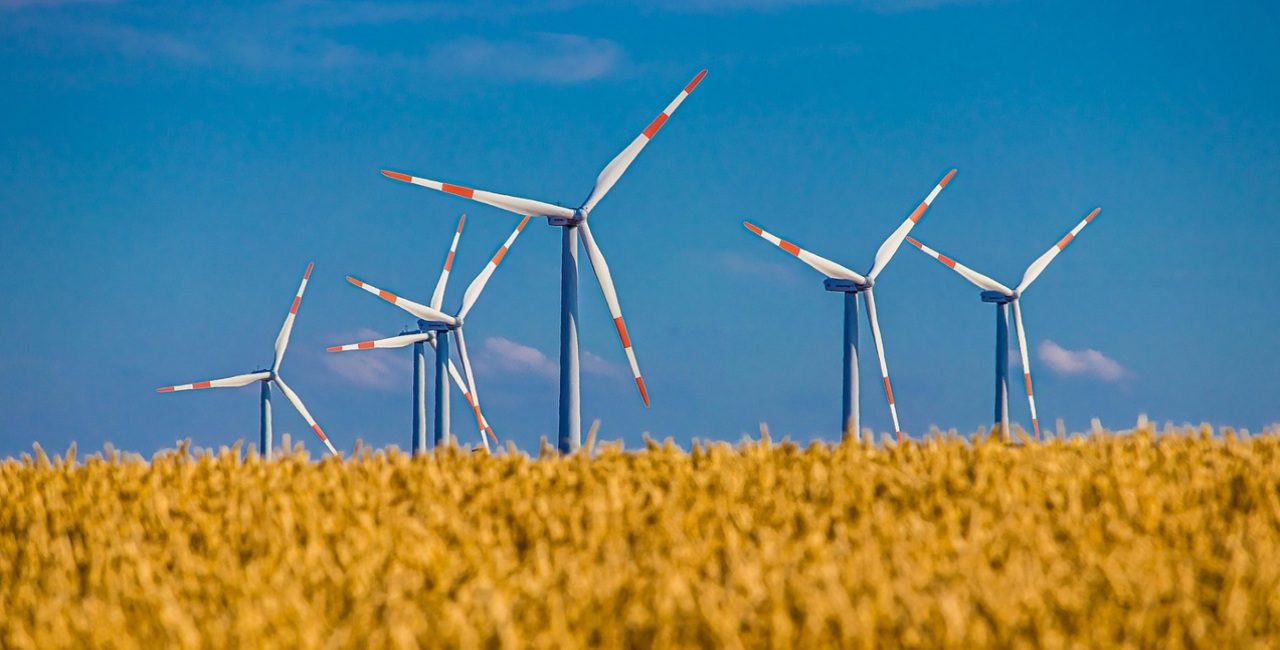
By 2026, the US is set to be one of the most important places in the world for the energy transition – with government incentives, quick technological advancements, lots of investment money and pro-renewable energy state policies, it’s a very attractive place for investors. For Turkish companies looking to expand internationally, the US market not only offers a lot of potential but long-term strategic opportunities.
Turkish EPC firms, with their strong contracting skills, a young and skilled workforce, and a lot of international experience, are well placed to get involved in renewable energy and infrastructure investments across the US. However the key to success will be a good, clearly-defined expansion strategy – choosing the right state, complying with the regulations, getting your immigration in order, and making the most of the incentives on offer.
In other words, the US isn’t just a market to sell to, it’s also a place to launch from – a place to do some research, test some ideas and establish a foothold to grow from. As the energy transition gets going after 2026, the early and smart decisions made now will give companies a real competitive edge in the international energy landscape.
California Energy Commission. (n.d.). California Energy Commission. https://www.energy.ca.gov/
Forbes. (2022, August 23). Inflation Reduction Act benefits: Clean energy tax credits could double deployment. Forbes. https://www.forbes.com/sites/energyinnovation/2022/08/23/inflation-reduction-act-benefits-clean-energy-tax-credits-could-double-deployment
Internal Revenue Service. (n.d.). Employer Identification Number (EIN). Retrieved December 12, 2025, from https://www.irs.gov/businesses/employer-identification-number
New York State Energy Research and Development Authority. (n.d.). Offshore wind. https://www.nyserda.ny.gov/All-Programs/Offshore-Wind
Sheldrick, A. (2025). Solar accounted for 84% of new U.S. power added in 2024. Reuters. https://www.reuters.com/business/energy/solar-accounted-84-new-us-power-added-2024-report-says-2025-03-11
Solar Energy Industries Association & Wood Mackenzie. (2025). U.S. Solar Market Insight 2024 Year in Review. Solar Energy Industries Association. https://seia.org/research-resources/solar-market-insight-report-2024-year-in-review
Solar Energy Industries Association. (2025, January 28). SEIA announces target of 700 GWh of U.S. energy storage by 2030. SEIA. https://seia.org/news/seia-announces-target-of-700-gwh-of-u-s-energy-storage-by-2030
U.S. Small Business Administration. (n.d.-a). Register your business. https://www.sba.gov/business-guide/launch-your-business/register-your-business
U.S. Small Business Administration. (n.d.-b). Basic information about operating agreements.
https://www.sba.gov/blog/basic-information-about-operating-agreements
U.S. Department of Energy. (n.d). Grid Modernization and the Smart Grid. U.S. Department of Energy. https://www.energy.gov/oe/grid-modernization-and-smart-grid
U.S. Department of Energy. (2025, January 3). Clean Hydrogen Production Tax Credit (45V) Resources. U.S. Department of Energy. https://www.energy.gov/articles/clean-hydrogen-production-tax-credit-45v-resources
U.S. Energy Information Administration. (2025, August 21). Texas state energy profile. U.S. Energy Information Administration. https://www.eia.gov/state/analysis.php?sid=TX
U.S. Energy Information Administration. (2024). U.S. LNG Export Capacity and Projections. https://www.eia.gov/todayinenergy/detail.php?id=62083
U.S. Energy Information Administration. (2025). Short-Term Energy Outlook. https://www.eia.gov/outlooks/steo/
U.S. Environmental Protection Agency. [EPA] (2023). Inflation Reduction Act – Renewable Energy Provisions. https://www.epa.gov/green-power-markets/summary-inflation-reduction-act-provisions-related-renewable-energy
Wagster Pettus, E. (2024, January 18). Mississippi legislators approve incentives for a factory that would make EV batteries. AP News. https://apnews.com/article/mississippi-ev-battery-plant-special-session-45399bd35a6c11fe303fb2a919557cfd
Discover the best US Work Visa options in 2026 and...
Read MoreUnderstanding EB1A Visa Requirements is essential for professionals aiming to...
Read MoreUnderstanding the E-2 Visa Minimum Investment is essential for entrepreneurs...
Read MoreThe Naturalization Interview is one of the most important steps...
Read MoreAkalan Law Firm, PLLC
All Rights Reserved © 2024