
Blog
EB-1 Visa: Everything You Need to Know 2026
EB-1 Visa: Everything You Need to Know 2026
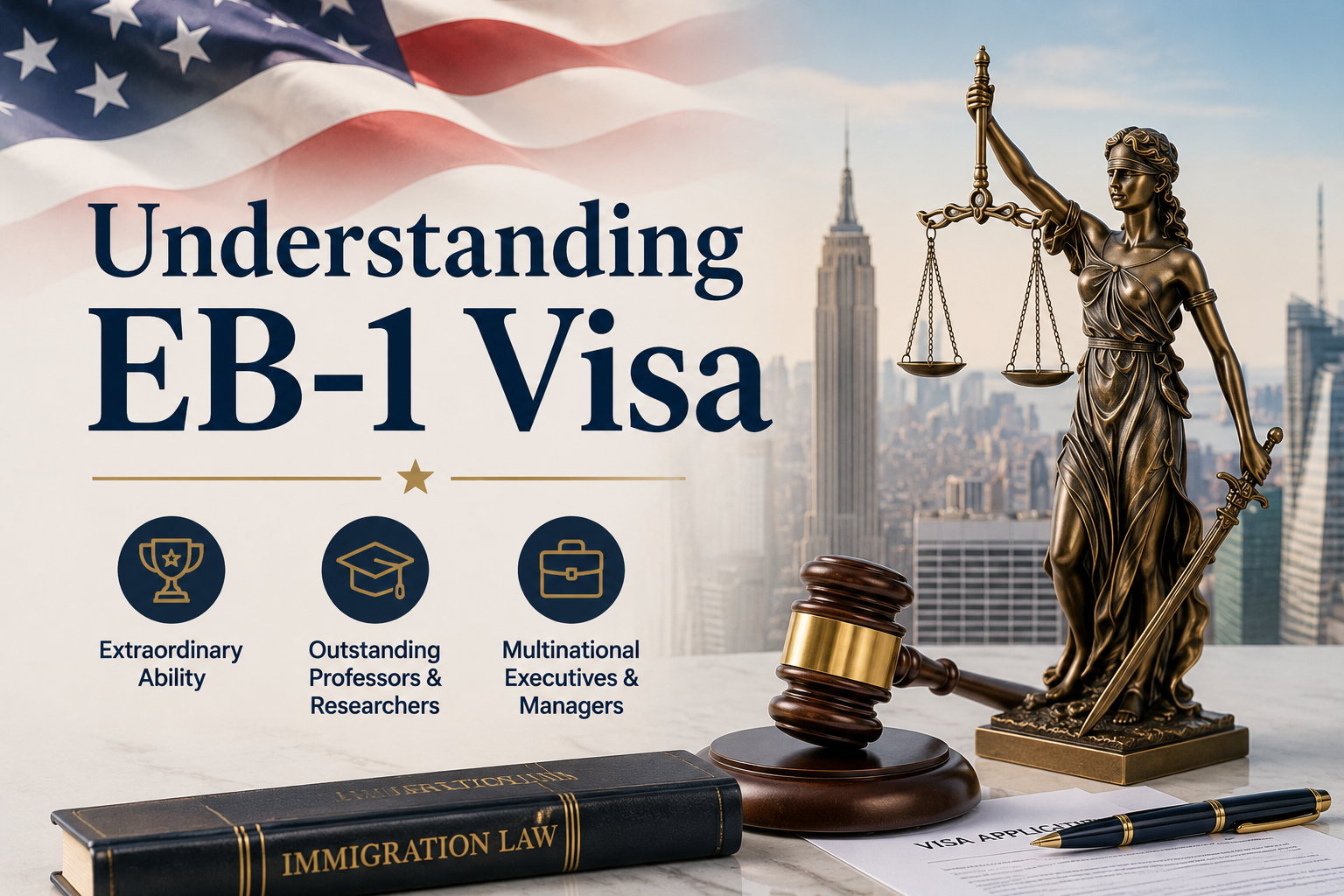
Explore the comprehensive guide on the EB-1 Visa, including requirements, filing processes, and benefits for individuals with extraordinary abilities, outstanding professors, and multinational executives.
▸ Executive Summary
The EB-1 visa is a highly sought-after employment-based immigrant visa category in the United States, offering a direct path to a Green Card for individuals with extraordinary abilities, outstanding professors and researchers, and multinational executives and managers. This guide covers the requirements, filing processes, and benefits associated with the EB-1 visa, providing essential information for prospective applicants.
The EB-1 visa is one of the most sought-after employment-based immigrant visa categories in the United States, reserved for individuals with extraordinary ability, outstanding professors and researchers, and multinational executives and managers. Because it offers a direct path to a Green Card and does not require labor certification, the EB-1 visa is often the fastest and most efficient route to becoming a lawful permanent resident for qualified applicants.
Understanding EB-1 Visa Requirements
Meeting the EB-1 visa requirements depends on which of the three subcategories an applicant falls under: EB-1A, EB-1B, or EB-1C. Individuals with extraordinary ability in the sciences, arts, education, business, or athletics must demonstrate sustained national or international acclaim through evidence such as major awards, published material, media coverage, and letters of recommendation from experts in the field; proving extraordinary ability also requires extensive documentation, and a foreign national may self petition without a united states employer. An outstanding professor or researcher must demonstrate international recognition for outstanding achievements in a particular academic field, with at least three years of teaching or research experience, and EB-1B requires a job offer from a prospective united states employer or petitioning employer for tenure track teaching or a comparable research position in higher education within an academic field. Meanwhile, a multinational manager or executive must prove that they have worked abroad for at least one year in a managerial or executive capacity for the same corporation or other legal entity related to the petitioning employer. Strong, well-documented letters of recommendation are often the difference between an approval and a denial, as USCIS relies heavily on this evidence to evaluate the credibility and significance of an applicant's achievements.
Filing Form I-140: The I-140 Petition
The EB-1 visa process begins with Form I-140, Immigrant Petition for Alien Worker, commonly referred to as the I-140 petition. This petition is filed with USCIS and must include comprehensive documentation supporting eligibility under the chosen EB-1 subcategory. Because processing times can vary, many applicants choose I-140 premium processing, which guarantees a decision, request for evidence, or notice of intent to deny within a set number of business days. I-140 premium processing can be especially valuable for professionals facing time-sensitive career moves or expiring nonimmigrant status.
Adjustment of Status and Form I-485
Once the I-140 petition is approved and a visa number is immediately available, applicants who are already in the United States may pursue Adjustment of Status by filing Form I-485, Application to Register Permanent Residence or Adjust Status. In many EB-1 cases, applicants can take advantage of concurrent filing, submitting Form I-140 and Form I-485 at the same time, which can significantly shorten the overall timeline to obtaining a Green Card. Applicants who are outside the United States, or who prefer not to adjust status domestically, may instead pursue consular processing through a U.S. embassy or consulate abroad.
The Visa Bulletin and Priority Dates
Visa availability for the EB-1 category is governed by the monthly Visa Bulletin published by the U.S. Department of State. The Visa Bulletin determines whether an applicant's priority date is current, which in turn determines eligibility to file Form I-485 or proceed with consular processing. EB-1 applicants generally benefit from shorter wait times than other employment-based categories, though backlogs can still occur for certain countries of birth.
Work Authorization and Life After Approval
While an Adjustment of Status application is pending, applicants can generally request work authorization and travel permission, allowing them to continue working and traveling without interruption. Once approved, EB-1 beneficiaries become lawful permanent residents, gaining the right to live and work permanently in the United States and, eventually, the ability to apply for U.S. citizenship.
Why Work With an Experienced Immigration Attorney
Given the detailed evidentiary standards involved in proving eligibility, working with an experienced immigration attorney can make a significant difference in the outcome of an EB-1 petition. From gathering compelling letters of recommendation and media coverage to strategically preparing the I-140 petition, navigating USCIS requests for evidence, and coordinating concurrent filing or consular processing, skilled legal guidance helps applicants present the strongest possible case for lawful permanent resident status.
Frequently Asked Questions
Conclusion
The EB-1 visa offers a streamlined path to permanent residency for individuals with extraordinary abilities, outstanding professors, and multinational executives. Understanding the specific requirements and processes for each subcategory is crucial for a successful application. Working with an experienced immigration attorney can greatly enhance the chances of approval by ensuring all documentation is comprehensive and compelling.
This article is provided for informational purposes only and does not constitute legal advice. Immigration law is complex and fact-specific. Please consult a licensed immigration attorney regarding your individual circumstances.
Latest News
-
 10 Aug 2026
Living Outside the U.S. With a Green Card? Why You May Need a Reentry Permit
-
 05 Aug 2026
L-1 Visa: A Comprehensive Guide to Intracompany Transfers for Multinational Companies (2026)
-
 03 Aug 2026
Is the EB 5 Visa Program the Smartest Investment?
-
 27 Jul 2026
From Campus to Corporate: The Ultimate F 1 Visa OPT to H-1B Blueprint
-
 23 Jul 2026
Great News for the Families of Green Card Holders!